

Brent settled around $89 and West Texas Intermediate around $84 on August 31, after US forces struck Iranian launchers on Larak Island in the Strait of Hormuz and Iran answered with attacks on American air bases in Jordan. By September 1, with two more tankers hit by projectiles, Brent was trading near $92 and WTI near $88. That is a risk premium going back into the price in a matter of sessions.
What makes this worth understanding is not the size of the move, which is modest by the standards of oil shocks. It is the timing. Crude is repricing higher in the same weeks that the Federal Reserve is deciding whether an inflation rate still above 4% requires another rate increase.
The strait is the whole story
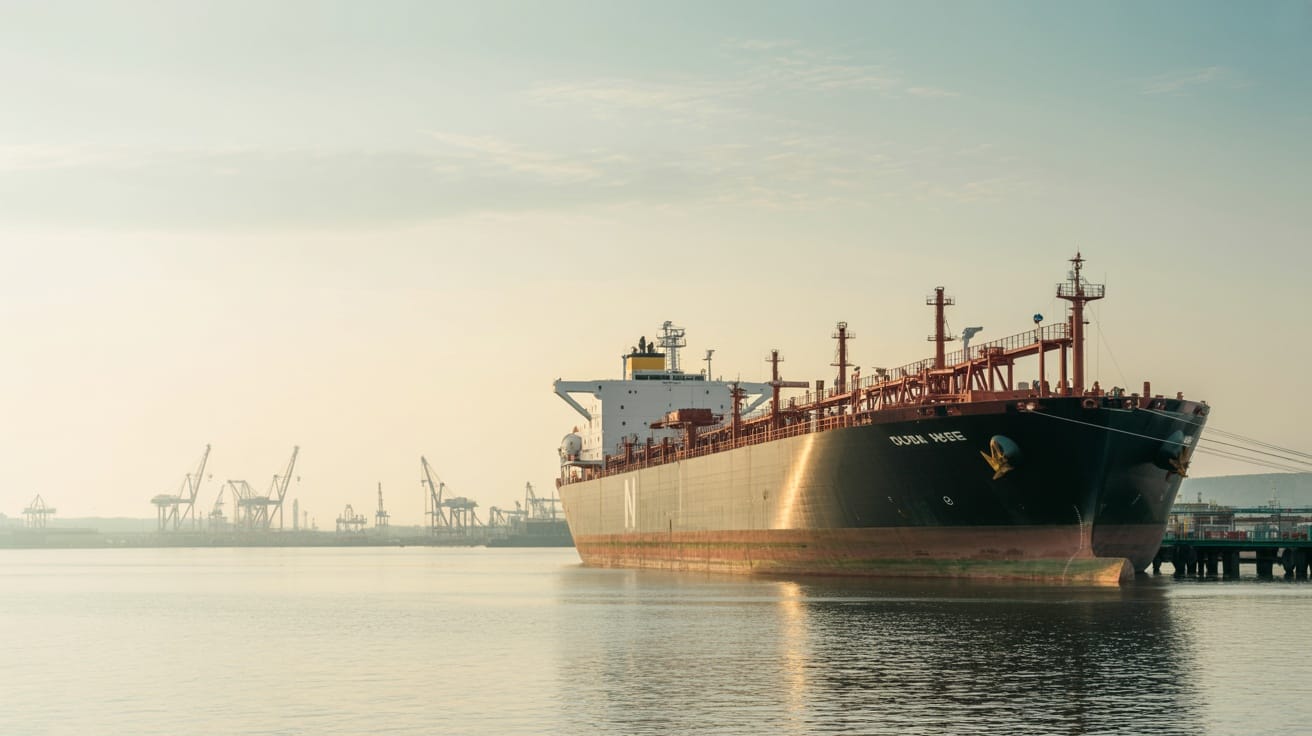
Roughly a fifth of the world's oil flows through the Strait of Hormuz. Nothing has to be sunk or blockaded for that to matter. Shippers simply have to slow down, and they have: traffic reportedly fell to about five vessels a day over the weekend as operators waited to see whether the escalation continued.
That is the mechanism behind a war premium. Barrels are not missing yet. What has changed is the probability, in the mind of every buyer with a refinery to supply, that they will be missing next month. Insurance, freight rates and the willingness to commit a hull to the transit all move first, and the flat price follows.
The conflict is now in its sixth month and has been widely described as a stalemate, which cuts both ways for prices. A stalemate means no resolution that would let the premium bleed out, and it also means no single event large enough to send crude vertical. Prices have chopped: both benchmarks fell more than 4% in the week before this escalation and still finished August slightly lower, having peaked near $93.50 on WTI back in July.
Why this lands on the Fed rather than just the pump
Whitmore's Watchlist:
XLE (Energy Select Sector SPDR Fund): Large-cap US integrated and exploration names, the most direct equity beneficiary of a sustained crude premium.
USO (United States Oil Fund): Tracks front-month WTI futures, useful as a read on the flat price rather than on company fundamentals.
OIH (VanEck Oil Services ETF): Services and equipment, where earnings respond to drilling activity rather than to the spot price alone.
The July FOMC minutes explicitly cited higher oil prices following Middle East escalation as part of the inflation picture, alongside tariffs and supply disruptions. Total PCE inflation was 4.1% in May with core at 3.4%. Three officials dissented in July in favor of raising rates immediately.
Energy is the one input that touches nearly every other price. It moves freight, it moves food, and with a lag it moves the core measures that the Fed says it cares about most. A central bank that has already been criticized for waiting can look at a fresh oil premium and conclude that the risk of doing nothing has grown. The committee meets on September 15 and 16.
Positioning around a premium that could vanish
The awkward feature of geopolitical premium is that it is the fastest-decaying component of any commodity price. A credible de-escalation removes it in days, which is why chasing crude strength on headlines has such a poor historical record.
Energy equities behave differently from the barrel itself. Producers with low breakevens generate cash across a wide band of prices, and their shares tend to lag both the spike and the collapse. That asymmetry is the reason many investors hold the sector for its cash flows and its inflation correlation rather than as a directional bet on the next headline out of Hormuz.
Refiners sit on the other side of that trade. Their economics depend on the spread between what they pay for crude and what they can charge for fuel, so a rising barrel is a cost rather than a windfall unless product prices keep pace. Airlines, chemical producers and freight operators face the same arithmetic in a more direct form, which is why an energy premium quietly redistributes earnings across the market rather than simply lifting it.
The broader point is that this is now a macro variable, not a sector story. An oil premium that persists into the autumn changes the inflation path, which changes the rate path, which changes the discount rate on everything else you own.
Whitmore's Take: A war premium is real money while it lasts and it lasts exactly as long as the uncertainty does. The useful question is not where crude goes next week, but whether your portfolio is positioned for an inflation path that stays higher for longer because of it.
Written by Daniel Whitmore
Millionaire Insiders